
Hi H Client!
Homeowners and property managers rarely find a landscape company in one place and reach out on the spot. Most come across you a few different ways first, whether that's an ad, a search result, your Google Business Profile or a post on Meta, and the visit right before they call or fill out a form is usually just the last step of a path that took days or weeks. That's worth keeping in mind when you think about which of your marketing is working, because the step that happened last is rarely the only one that did the work. It's also why your marketing works best as one connected system rather than a collection of separate services, with your website, search, ads, Business Profile and social media each playing a part and measured against the same goal of bringing in the right work.
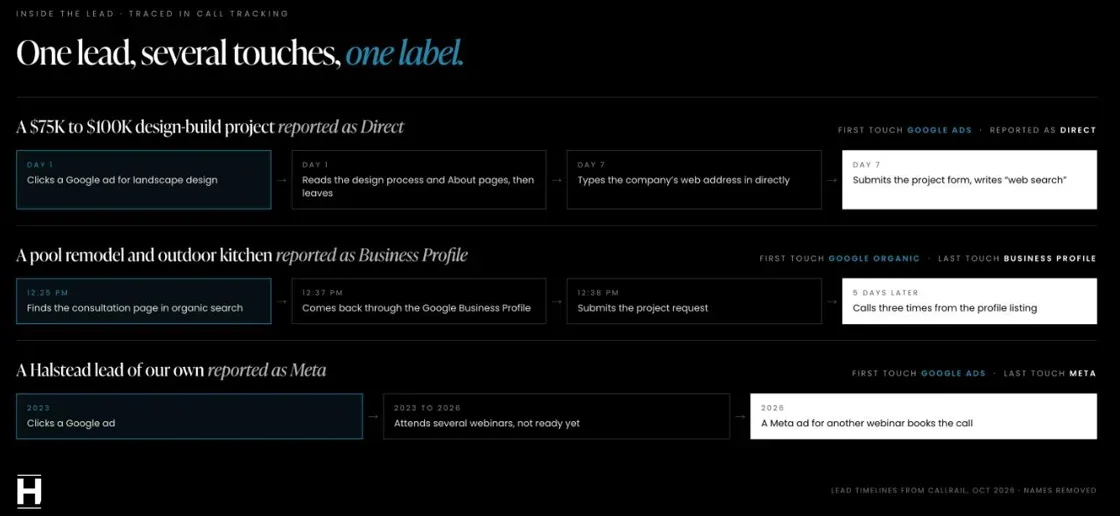
Your Best Opportunities Found You More Than Once
When we trace the calls and forms we look at back through call tracking, we see the same kind of story again and again. For example, one homeowner clicked a Google ad for landscape design, read through the company's design process and About pages, and left without reaching out. Six days later they typed the company's web address in directly and submitted a request for a $75,000 to $100,000 project, so the inquiry was reported as Direct, even though a Google ad is what brought them to the company in the first place. In another example, a homeowner found a company's consultation page through organic search, came back twelve minutes later through the Google Business Profile, submitted a request for a pool remodel and an outdoor kitchen, and then called three more times from the profile listing the following week.
As you of course know, we use CallRail to track the calls and forms that come in from your marketing, and it records each visit a person made before reaching out, which is how we can see these paths at all. When we look at an inquiry in CallRail, it's labeled by its first touch, meaning the way that person first found you, and CallRail also keeps the last touch, the visit right before they reached out, so we look at both whenever we're deciding where your budget should go. Google Ads counts things its own way, spreading the credit across the different ads a person clicked along the way, so the same inquiry can show up under a different channel depending on which platform is reporting it, without anything about the homeowner or their project changing.
Your Channels Do Different Jobs in the Same System
That's why we plan your search, social, Business Profile and SEO together, rather than judging each one by the calls it gets credit for. Search reaches people who are already looking, social reaches people who aren't looking yet and brings back the ones who visited and left, and your Business Profile is often where all of it turns into a phone call. Outside research shows the same thing, and in a 2025 analysis of 13 lift studies, people who saw a brand's Meta ads went on to search for that brand more, with about 13% more organic searches and 14% more paid searches than people who didn't see them. When each channel feeds the others like that, the results show up in places you wouldn't expect, which is exactly what we see when we trace your calls and forms.
It matters most heading into winter. Homeowners planning a design-build project are spending more time researching than they used to, with nearly 30% planning more than ten hours of research in Modernize's 2025 homeowner survey, so the marketing that reaches them in December often shows up in your reports in March under a different name. Turning one channel off in the slower months can look harmless until spring, when the calls coming through your profile and organic search have fewer people behind them.
Marketing and Sales Show the Full Picture Together
Because every report credits the path a little differently, the clearest picture of your year comes from putting your marketing numbers next to three numbers from your sales side, which are proposals sent, close rate and average signed job value, split by division where you have them. Marketing's job is to bring you the right opportunities and your team's job is to turn them into signed work, so looking at both together shows us where the whole system is working well and where there's room to grow. The next improvement might be on the marketing side, like which services we promote or which towns we focus on, or it might be on the sales side, like how quickly a new inquiry hears back or how a proposal is presented, and seeing both sets of numbers together makes it clear where to start. Those three numbers stay the same no matter which step gets the credit, which is why we're planning to build your 2027 plan around them.
Your Revenue Dashboard Connects the First Visit to the Signed Job
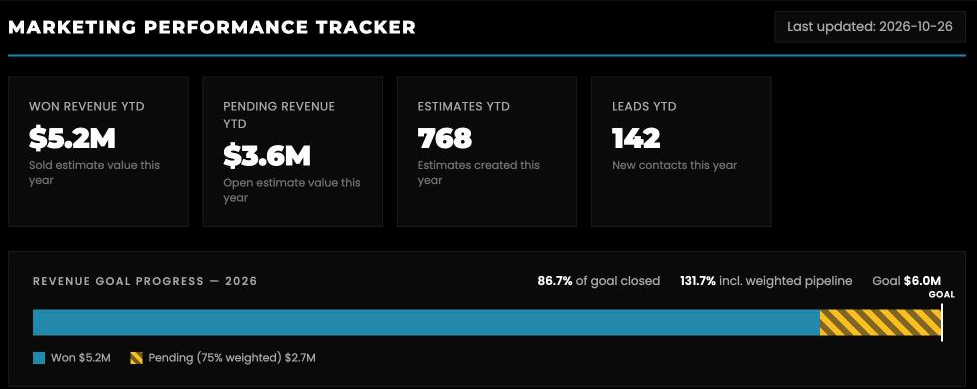
For clients whose CRM or estimating software is connected to their Halstead dashboard, these numbers sit right next to your marketing in the Leads & Revenue section. You can see the revenue you've won so far this year, the proposals that are still open, how many estimates and new inquiries came in, and how close you are to your revenue goal for the year, all in one place. It also separates the work that came from digital sources from the work that came from referrals, jobsite signs and word of mouth, so the conversation about your marketing can start from signed revenue rather than lead counts. If yours isn't connected yet, your Project Manager can walk you through what it would take.
Bring those three numbers to your year-end review, even rough ones, and your Project Manager will walk through what's behind them with you, from where your best jobs started to how many times they found you before they reached out.
Until Next time,
Anna Halstead
Co-Owner, Halstead Media Group
