
Plenty of landscape companies have the talent to scale. What they often don’t have is the growth infrastructure to support it.
This industry was built on hustle. Relationships. Referrals. Operational grit. The companies that got to $5M, $10M, $20M did it the hard way — and every bit of it was earned.
The willingness to show up before sunrise, outwork the competition, and build something real from nothing. That still matters — it always will.
But at a certain point, the business begins to outgrow the systems that built it. What comes next can't rely on hustle alone.
It takes a sales process that can run without the owner. A pipeline leadership can actually see and forecast. Marketing and sales working from the same information. A clearer understanding of what's driving revenue and where the next opportunity is coming from.
That's not a failure of effort. It's a natural consequence of growth.
The systems that helped a company reach $5M aren't always the systems it needs to reach $15M.
The cost of not building it
Invisible.
And entirely real.
Growth that feels harder than it should.
Pipeline that depends too much on who's selling and how consistently they're following up.
Marketing spend that's hard to defend because nobody can confidently connect it to closed work.
A business that still depends too heavily on the owner to keep sales, marketing, and growth moving.
The pattern
Growth brings complexity. The systems have to keep up.
We've watched this play out for more than a decade across hundreds of landscape companies of different sizes, in different markets. The specifics vary, but the needs become familiar.
Instead of relying on memory, relationships and individual habits, there's a CRM and a defined sales process that gives leadership a clear view of the pipeline.
The conversation moves beyond leads and activity to what's creating real opportunities, winning work and driving revenue.
Marketing, sales and operations stop living in separate places. Information moves between them, giving the business a clearer picture from first touch through closed work.
As a landscape company gets bigger, this infrastructure matters more. It gives the people leading the business better visibility, more consistency and greater control over growth.
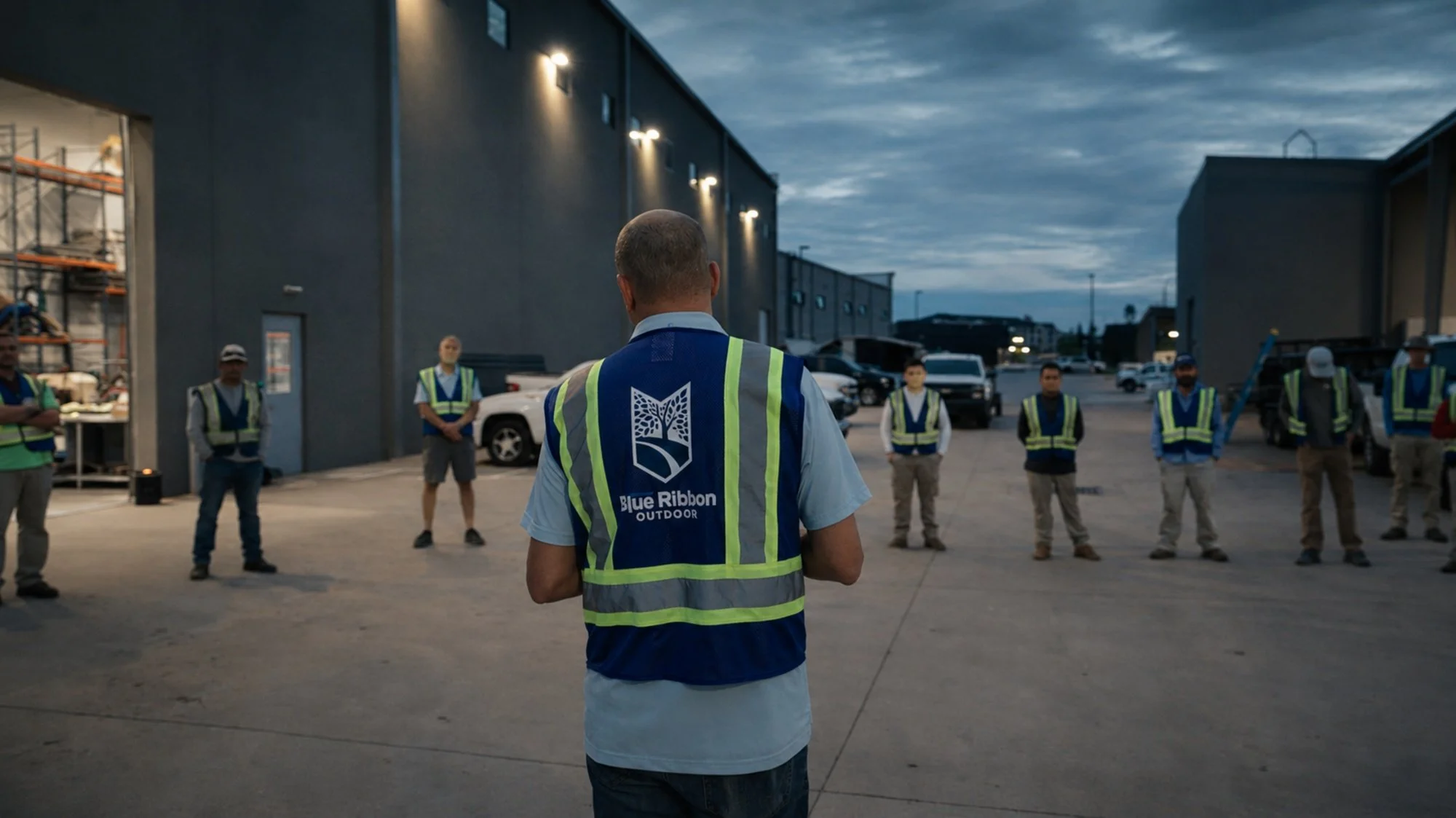
WHEN THAT SHIFT HAPPENS, GROWTH BECOMES LESS REACTIVE.
And more intentional.
what changed
The landscape industry is changing quickly.
Consolidation, private equity, technology and changing buyer behavior are raising the bar for how landscape companies grow and compete.
More companies are being acquired and combined across markets.
Multi-company groups are bringing more resources and structure into local markets.
More capital is accelerating acquisitions and investment across the industry.
More landscape companies are expanding into new markets and locations.
AI is making generic content and marketing easier for anyone to produce.
Buyers research and compare companies long before making contact.
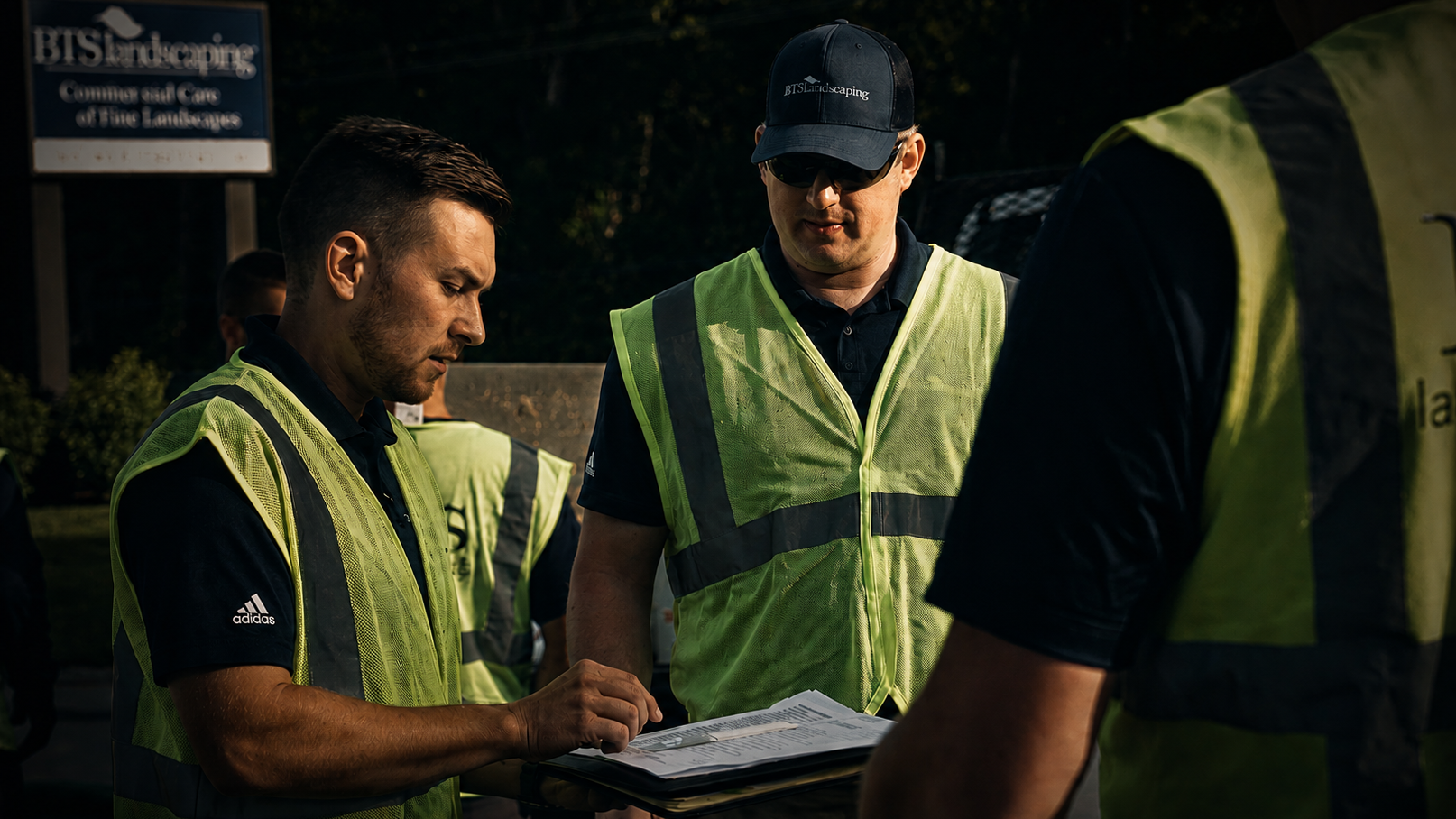
generic marketing becomes noise.
The advantage shifts to companies with better visibility, stronger systems, and more control over growth.
What we believe
Five principles that shape how we approach growth.
SEO, paid media, content, your website, CRM and sales process work better when they're connected. Each part should contribute to the same growth objectives and be measured against them.
Commercial landscape companies have always grown through relationships. They still do. But buyers also research, compare and form opinions before a sales conversation begins. Marketing builds the familiarity and trust that makes business development stronger.
Knowing where opportunities come from, what happens in the pipeline and what turns into revenue gives leadership better information to make decisions.
A second branch, new market or acquisition adds complexity quickly. Shared systems for marketing, sales, CRM and reporting create consistency across the business.
Every landscape company has different strengths, gaps and priorities. The right solution might involve demand generation, CRM, sales process, reporting or several together. The scope should follow what the business needs.
Why us
That is the shift Halstead was built for.
Not because we predicted it. Because we lived it alongside the companies we serve.
Halstead was built from inside this industry. That experience shapes how we see the business — the economics, the sales cycles, the seasonality, the people and the realities of growth.
It means we don't have to learn the landscape business before we can help improve how it grows.
As our clients grew, what they needed from us changed. Marketing alone wasn't enough. They needed better visibility into pipeline, stronger sales processes, connected systems and a clearer link between marketing activity and revenue.
So our work expanded with those needs.
That evolution became Growth and Revenue Operations: demand generation, CRM, sales process, reporting and the connections between them.
For some companies, that means connecting HubSpot and Aspire. For others, it means building a more visible pipeline, improving demand generation or creating consistency across multiple branches.
The work is different for every company. The objective is the same: build a more deliberate, measurable system for growth.
OUR CLIENTS TELL IT BEST
Watch the Stories
What started as a marketing company became something different.
A Growth Operations platform built specifically for the landscape industry.
Today, our work extends across demand generation, CRM, sales process, reporting and the connections between them — giving landscape companies a clearer view of how opportunities are created, moved through the pipeline and turned into revenue.
The goal is more than traffic and leads. It's greater control over growth.
the shift
From disconnected efforts to a connected growth system.
- 01Multiple partners working toward different goals
- 02Data lives across different systems
- 03Marketing and sales have limited visibility into each other
- 04Follow-up depends too much on individual process
- 05Leadership has an incomplete view of what's driving growth
- 01Partners and teams working toward shared growth objectives
- 02CRM and operational systems sharing better data
- 03Marketing creates demand that sales can see and act on
- 04Clear processes create more consistent follow-up
- 05Leadership has better visibility into pipeline and revenue
This is the ground.
Not the ceiling.
It's the standard behind how we approach Growth Operations: connect the right systems, create greater visibility and give landscape companies more control over how they grow.
Start Here
The Growth Gap
Review
45 minutes. A real diagnosis of your growth operating system, and an honest answer on whether we're the right partner to build it.