

H/Core + H/Demand
Four Years of Proof. Eight Service Lines.
A thirty-year-old company running eight service lines had no way to tell which ones were working. Not because the demand wasn’t there — because nothing in the reporting could separate one line from another. HALSTEAD built the visibility first, then built demand against it, line by line.
partnership
Conversions tripled. Cost per lead fell 27%.
For four years, HALSTEAD built the measurement underneath the demand — structuring search and paid by service line, controlling negative keywords, and verifying every lead through CallRail before it counted.
By April 2026, the data supported a larger investment. Monthly spend increased roughly 150%. April conversions rose 84% over the same month in 2024, and May set a new record. Cost per conversion held steady instead of climbing with volume.
Every line, under target.
Cost per lead by service line, against the target set for each.
| Service line | Cost per lead | Target | Under target |
|---|---|---|---|
| Residential maintenance | $25 | $77 | 3.1x |
| Fencing | $31 | $140 | 4.5x |
| Softscapes | $41 | No target set | Not applicable |
| Landscape design | $43 | No target set | Not applicable |
Ranking #1 for “backyard landscaping near me.”
Meta click-through rate ran at 2.4x the top of the industry range: 3.07% vs. 1.30%.
Teddy’s had demand. Nobody could tell where it was coming from.
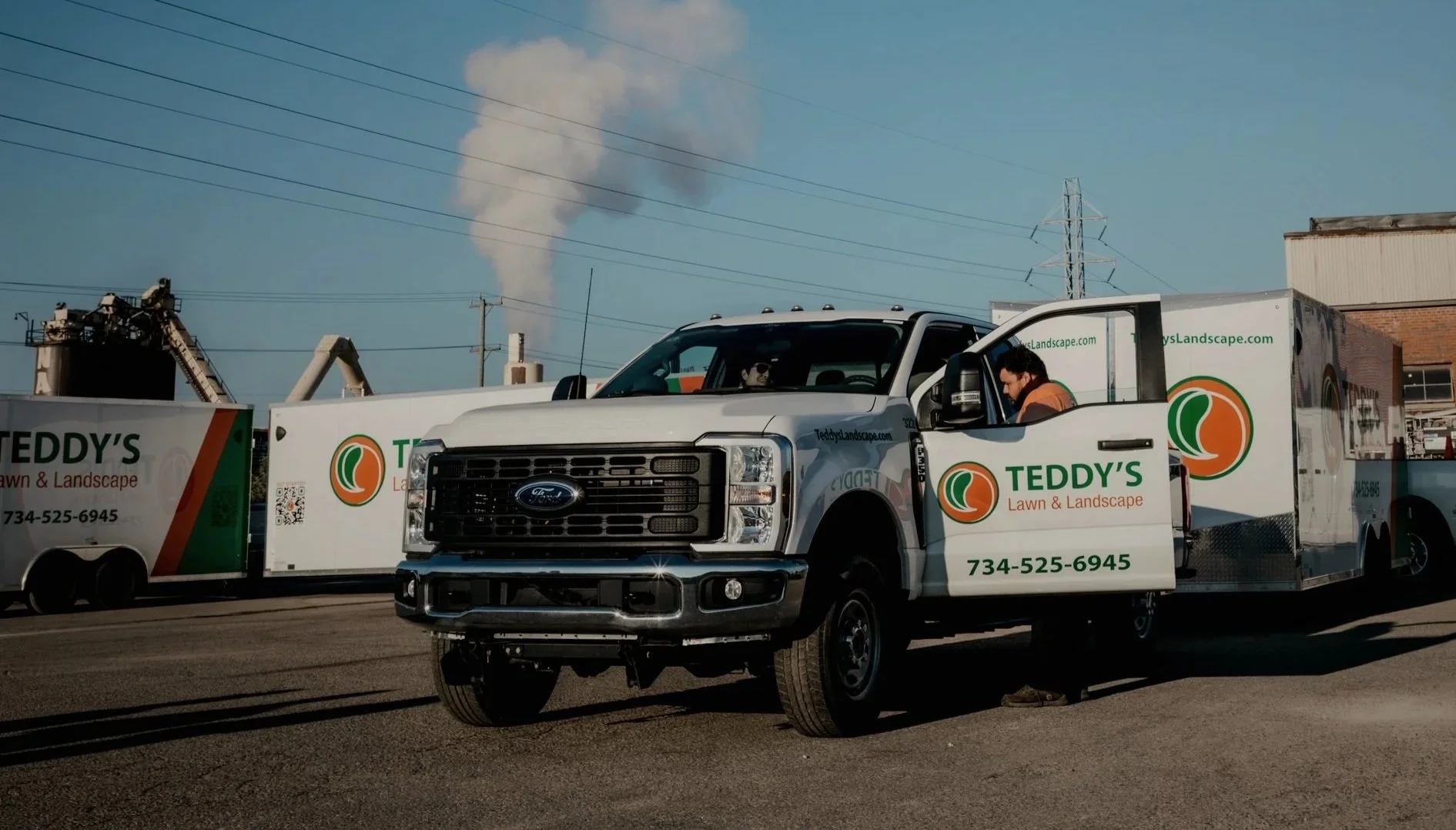
Teddy’s Lawn & Landscape has served Southeast Michigan since 1994 across design/build, maintenance and fertilization, irrigation, fencing, hardscape and commercial snow. It is the kind of company that can support a property across multiple needs instead of asking the customer to coordinate several contractors.
The problem was not a lack of activity. It was an incomplete view of results. Meta’s pixel reporting was effectively unusable, showing almost no leads across a three-year pull. The team could see clicks and spend, but it could not use the platform’s data to verify outcomes. Paid search volume had also flattened at 152 leads one year and 150 the next.
Without dependable conversion and lead-quality data, keeping the budget capped was rational. Teddy’s needed to know the cost of a real lead by service line before leadership could commit more capital.
No way to tell which lines were earning
Build the visibility first. Build the demand against it.
HALSTEAD established an independent measurement layer for calls, forms and texts, added a qualification step, and separated demand generation by service line. That gave Teddy’s a dependable cost per qualified lead by line, and a pipeline they could read before deciding where the next dollar went.
H/Core built the visibility. H/Demand built against it. One connected system rather than a set of services running beside each other.
Website and search, built to give a thirty-year-old company a footprint that matched it.
A full relaunch as the business outgrew the first site, with irrigation and commercial location pages, FAQ schema and rewritten service copy.
Meta’s pixel reporting was returning almost nothing usable across a three-year pull. CallRail became the system of record instead: every call, form and text tracked by campaign and service line, with a qualification step, so the number leadership decides from is a real lead.
Design/build, residential maintenance and fertilization, irrigation, fencing, patios and hardscape, finished basements, commercial design/build and commercial snow. Each separated, each budgeted individually, each measured against its own cost target.
Search and paid built per line rather than per channel, so seasonal money moves to whichever line is earning.
All of the fencing has pretty much been through marketing.
Tracy · Teddy’s Lawn & Landscape
They stopped asking whether marketing worked. They started asking which line.
April conversions, 2024 to 2026
Increase in monthly spend
Cost per conversion, held as volume grew
Before, every line looked the same on paper. Now each one carries its own number — what a lead costs in fencing, in residential maintenance, in design — and money moves to whichever line is earning, mid-quarter, without waiting for an annual review.
The trajectory backs it up. April conversions climbed from 154 in 2024 to 182 in 2025, then to 284 in 2026 and 313 in May. Cost per conversion held between roughly $36 and $42 rather than deteriorating as volume grew.
A new service line, built from zero, running 4.5x under target.
Teddy’s launched fencing about a year ago. It had no customer base, no referral history and no reputation behind it — the things every other service line had been leaning on for thirty years.
It now runs at $31 per lead against a $140 target.
That is the cleanest test of a demand system there is. Not growing a line that was already working, but standing one up from zero and having it outperform every cost assumption in the plan. The client’s own summary of where that work came from: “All of the fencing has pretty much been through marketing.”
Planned cost per lead
Cost per lead, 4.5x under target
Start Here
The Growth Gap
Review
45 minutes. A real diagnosis of your growth operating system, and an honest answer on whether we’re the right partner to build it.