
How to Position a Commercial Landscape Company to Win Better Contracts
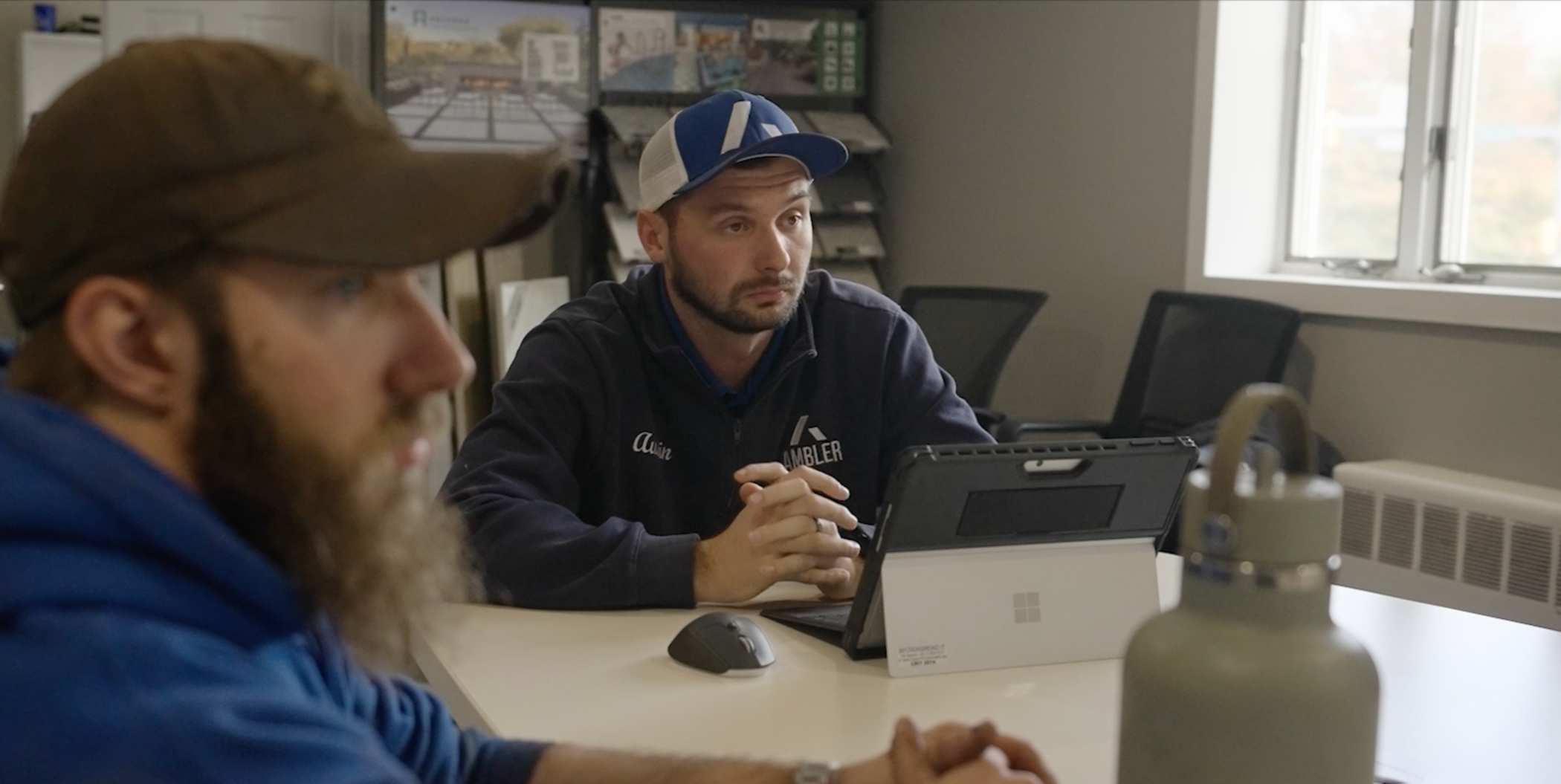
What Property And Facility Managers Notice Before They Ever Reach Out
Commercial growth rarely breaks because a landscape company lacks the capability.
It breaks because the market cannot quickly determine whether that company is built to perform at the level a commercial account requires. Property and facility managers are not evaluating a landscape company the way a luxury homeowner does. We explored that residential decision-making process in our article, How Luxury Homeowners Choose a High-End Landscape Company. They are not looking for inspiration, emotional resonance, or design aspiration. They are assessing whether the company appears structured, accountable, and operationally mature enough to perform inside a real-world property environment where standards, communication, and execution carry consequences.
That judgment happens early. In many cases, it happens before a meeting is scheduled, before a proposal is requested, and before operations have the opportunity to demonstrate what the company can actually deliver.
For landscape companies pursuing stronger commercial growth, this is the issue. The market is not simply evaluating what you do. It is evaluating whether your company looks equipped to win and retain larger contracts.
COMMERCIAL PROSPECTS ARE EVALUATING RISK FIRST
In residential markets, brand presentation often shapes perceived taste and trust. In commercial markets, it shapes perceived risk.
A property manager or facility manager is responsible for more than selecting a vendor. That person is protecting a property standard, a tenant experience, an ownership expectation, and in many cases an internal reporting structure. The decision is not only about whether your company can maintain a site well. It is about whether your company will create operational confidence or operational drag.
This is why commercial stakeholders respond differently to marketing. Broad statements about quality and service do very little on their own. The market wants evidence of control. It wants to see that your company communicates clearly, documents consistently, responds predictably, and understands the realities of account management across a property, portfolio, or regional footprint.
Commercial decision-makers are not looking for possibilities. They are looking for reduced uncertainty.
OPERATIONAL CLARITY OUTPERFORMS GENERAL PROMISES
Many landscape companies still market commercial work with language that is too broad, too visual, or too similar to the way they market residential services.
That weakens credibility.
Commercial prospects are not looking for a company that appears generally capable. They are looking for a company that appears specifically prepared. They want to know how your team handles communication, how issues are escalated, how site standards are maintained, how scope is documented, and how accountability is managed across the life of the contract.
This is where stronger companies begin to separate from merely visible ones. A landscape company that explains its operating discipline with precision immediately feels more credible than one that relies on vague claims and generic service descriptions.
In commercial markets, clarity is not a branding exercise. It is proof of management maturity.
YOUR WEBSITE SHOULD SIGNAL ACCOUNT STABILITY
Property and facility managers read a website differently than a residential audience. That distinction is part of a broader market shift we outlined in The Strategic Divide Between Residential and Commercial Landscape Marketing.
They are not simply scanning for attractive projects. They are looking for signs that the company behind the website can support a serious account without creating friction. They notice whether the commercial service offering feels structured or buried. They notice whether the language reflects real operational understanding or marketing generalities. They notice whether the company appears stable, process-driven, and selective, or whether it still looks like a business trying to be everything to everyone.
This becomes even more important as landscape companies move upmarket, pursue regional commercial growth, or begin operating in environments where ownership expectations are becoming more institutional. A company does not need to speak like a private equity firm to appeal to that world. It does need to look disciplined enough to operate inside it.
The commercial website that performs best is not the one saying the most. It is the one reducing the most doubt.
COMMUNICATION STYLE BECOMES A PERFORMANCE SIGNAL
Commercial prospects assign meaning to communication style quickly.
They notice whether your outreach feels organized. They notice whether your proposals feel considered. They notice whether your follow-up cadence reflects discipline or reactiveness. They notice whether your company sounds like it understands the operational context of the work or whether it sounds like it is simply chasing another account.
These cues matter because communication in commercial landscaping is never separate from performance. Commercial prospects understand that the tone and structure of your sales process often preview the tone and structure of the account experience itself. If the front end feels loose, fragmented, or inconsistent, the market assumes the backend will feel the same.
That is why better commercial positioning improves more than perception. It improves contract quality by helping stronger prospects recognize reliability before the sales team has to explain it.
THE MARKET IS ALSO EVALUATING SCALABILITY
As commercial landscaping becomes more consolidated, the market has started rewarding a different level of company presentation.
Property and facility managers want confidence that a landscape company can perform. Ownership groups, operators, and platform-minded leadership teams often evaluate something broader. They want confidence that the business is structured in a way that can scale, integrate, and maintain standards across growth.
That does not mean every commercial page should speak directly to mergers and acquisitions. It does mean the company’s market presence should reflect operating maturity. Clear service architecture, disciplined messaging, professional account language, and evidence of management structure all contribute to that perception. They tell the market this is not a loose collection of services. It is a company with definable standards, internal control, and the ability to perform under increased complexity.
In that sense, commercial positioning does not only help win contracts. It can strengthen how the business is valued by the market.
VISUALS STILL MATTER, BUT DIFFERENTLY
Commercial prospects still respond to visuals, but not for the same reasons luxury homeowners do.
In residential marketing, visuals communicate aspiration and taste. In commercial marketing, visuals communicate consistency, professionalism, scale, and control. The question is not whether the work looks beautiful. The question is whether the company appears capable of maintaining standards across real environments with real operational constraints.
Photography should reflect this. Commercial imagery should show clean execution, property context, site order, and the type of environments the company is built to support. It should help a prospect recognize account-fit quickly. Video should do the same, but with even more clarity. Strong commercial video helps prospects assess scale, logistics, crew professionalism, and operational control in ways static imagery cannot. When used well, it does not act as decoration. It acts as proof.
That matters because commercial decision-makers are often evaluating risk before they evaluate scope depth. Video can reduce uncertainty faster by making execution visible and showing whether a company operates with real structure in the field. As we explain in our article on performance videography for commercial landscaping, the strongest commercial video is not aesthetic-first. It is clarity-driven and built to communicate process, precision, and reliability.
When commercial visuals are mixed carelessly with unrelated residential imagery or presented without structure, the market has to work too hard to understand what the company is actually built for. The same is true when video is treated like a highlight reel instead of a performance asset.
That confusion lowers confidence, and lower confidence weakens conversion.
For a deeper look at how video can reinforce operational maturity and reduce buyer uncertainty, read our article on performance videography for commercial landscaping in 2026 built to win contracts.
BETTER COMMERCIAL POSITIONING WINS BETTER CONTRACTS
The commercial side of the market is not becoming easier to win through visibility alone.
It is becoming more selective. Commercial property and facility managers are faster to judge, less patient with ambiguity, and more attuned to signs of structure. The landscape companies that perform best in this environment are not simply promoting commercial services. They are presenting themselves as companies built to execute inside a more demanding operating environment. That is the distinction.
When your market presence communicates control, accountability, and stability, you attract better-fit commercial prospects. Sales conversations become cleaner. More of the right opportunities recognize fit earlier. Growth becomes less dependent on explanation and more supported by positioning.
This is the new standard. The commercial landscape companies that treat positioning like a performance asset will win better contracts.
How to Position a Commercial Landscape Company to Win Better Contracts
If your landscape company is pursuing larger commercial opportunities but still presenting itself with broad service language, unclear commercial proof, or residential-heavy messaging, the issue may not be lead volume. It may be market confidence.
Halstead helps landscape companies sharpen how they present commercial capability so their marketing supports better contracts, stronger-fit prospects, and a more mature growth trajectory.
Frequently Asked Questions About Commercial Landscape Company Positioning
How to Position a Commercial Landscape Company to Win Better Contracts
To win better commercial contracts, a landscape company needs to present itself as operationally mature, not simply broadly capable. That means the messaging should communicate structure, accountability, communication discipline, and the ability to maintain standards across a real property environment. Property and facility managers are often evaluating risk before they evaluate scope depth, so the company that appears more controlled and dependable will usually enter the conversation with an advantage.
What do property and facility managers look for in a commercial landscape company?
Property and facility managers tend to look for consistency, responsiveness, clear communication, defined scope, and a low-friction working relationship. They want confidence that the landscape company can protect site standards, respond predictably, and make their job easier rather than harder. In practice, that means your website and sales language should make operational reliability visible before a prospect ever reaches out.
What should a commercial landscaping website say to attract better-fit prospects?
A strong commercial landscaping website should clearly state who the company serves, what environments it is built for, how it operates, and what makes the account experience more reliable. It should move beyond generic claims about quality and service and instead show process clarity, communication standards, service structure, and commercial relevance. Better-fit prospects are more likely to respond when the website reduces uncertainty and helps them see that the company understands the realities of managing a commercial property.
How is commercial landscape marketing different from residential landscape marketing?
Commercial landscape marketing needs to emphasize operational confidence, while residential marketing more often emphasizes aspiration, design value, and emotional fit. A luxury homeowner may respond first to taste, transformation, and visual storytelling. A commercial prospect is more likely to respond first to signs of reliability, site control, reporting discipline, and communication maturity. When a landscape company markets to both audiences the same way, it often weakens relevance for both.
Can better positioning increase the value of a commercial landscape company?
Better positioning can strengthen how the market perceives the company’s scalability, maturity, and strategic value. In commercial landscaping, where private equity activity and acquisitions remain active, ownership groups often look beyond revenue alone and assess whether the business appears disciplined, transferable, and capable of supporting growth. Positioning does not replace operations, but it does influence whether the market sees those operations as organized, credible, and built for a larger future.
